
We take a look back at how Easter was celebrated in Ireland in years gone by. Easter was traditionally a time marked by deep religious devotion, festive celebrations and a wealth of unusual customs and traditions, many of which have been recorded or survive in folk memory.
Easter, a major event in the Christian calendar, commemorates the resurrection of Jesus Christ and signals the end of the Lenten fast.
Holy Week in Ireland
Holy Week – the days leading up to Easter – was traditionally a time of extreme fasting for Catholics across Ireland. Black tea, dry bread, porridge and potatoes seasoned only with salt were the usual fare, with fish sometimes eaten in coastal areas.
The week also brought a flurry of activity – houses were whitewashed and spring-cleaned in preparation for Easter.
Good Friday traditions
On Good Friday, many visited the church at 3 o’clock to do the Stations of the Cross, as this is the hour associated with the time of Christ’s death on the cross.
Many Catholics across Ireland observed a black fast on Good Friday, consuming only water, though this practice gradually relaxed over time. On Good Friday, in late 1930s Butlerstown, Co. Cork, the usual meal of fish and milk gave way to “cnuasach” gathered from certain local strands. Cnuasach trá, or the act of gathering shellfish and seaweed from the shore, had long been practised in Ireland. In other parts of the country, meals on Good Friday were often restricted to dry bread and water. In Co. Louth, the fast was even stricter – nettle gruel was the only food consumed that day.
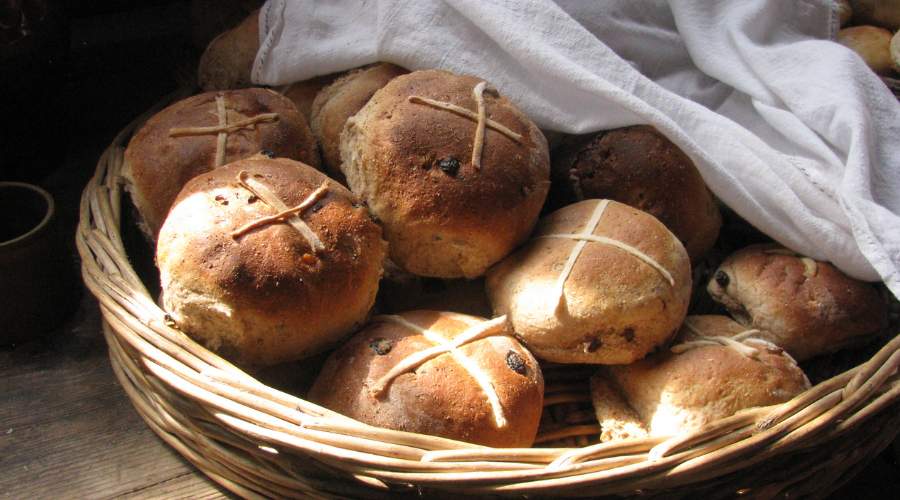
All bread baked on Good Friday was marked with a cross in remembrance of Christ’s crucifixion. This tradition lives on in the form of hot cross buns, which are still enjoyed in Irish households on this day.
No work was to be done on Good Friday; however, depending on when Easter fell, Good Friday was traditionally a day for sowing corn and grain, provided the potato seed had already been planted. All pubs were to close on Good Friday – a restriction that had been in place since 1927. This changed in 2018 when pubs were allowed to open for the first time on Good Friday in over 90 years.
Holy Saturday
Getting food and water blessed was an important ritual on Holy Saturday. Catholics brought foodstuffs such as salt, butter and potato seed to the church to be blessed that morning when they attended the Easter Vigil. The blessed salt, believed to have curative properties, was then sprinkled on eggs eaten on Easter Sunday, on cows during calving and on the new calves themselves.
The Easter holy water was sprinkled on crops, fields and animals, as well as in outhouses and homes. A container of Easter water kept in the home was believed to offer protection from fire. A drop of Easter water was also added to the first mash of bran given to a cow after calving, as well as to the first churn of milk.
Whipping the herring
During Lent, the Irish Catholic population endured a fast without meat, often relying on fish, particularly herring, for sustenance. Salted and dried herring were consumed in large quantities throughout the fasting season. However, on Holy Saturday, at the end of Lent, people turned on the humble herring in a curious ceremony – a mock funeral procession known as “whipping the herring”.
Butchers, eager to resume meat sales, often led the procession, parading a dead herring on a pike or tied to the end of a rope through the streets. The crowds whipped the fish to pieces before throwing the remains into a river. On the return journey, a dead spring lamb, decorated with flowers and ribbons, was carried in celebration of the end of the fast.
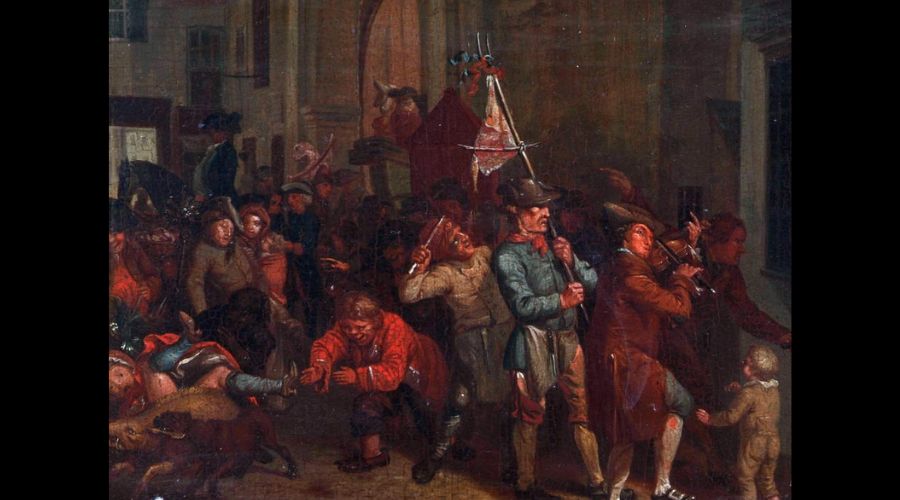
This tradition persisted into the 20th century in some Irish cities, towns and villages. Whipping the herring was among the Easter customs recorded in Cork city.
Easter Sunday in Ireland
On Easter Sunday, people would attend early morning Mass, often dressed in their best clothes. Easter Mass was the joyful culmination of the long Lenten season and the most important component of the Easter celebration.
Watching the sun dance
Before dawn on Easter Sunday, many rose to witness the rising sun “dance” in the sky – a practice linked to Christ’s resurrection. When Christ died on Good Friday, it was said that the sun and moon were darkened. At Easter, just as Christ rose from the dead, the sun rose again – not only returning but dancing with joy to mark his triumph over death. The dancing sun became a symbol of renewal and joy.
People gathered on high ground to witness the spectacle, though some watched the sun’s reflection in a pan of water to protect their eyes. Watching the sun dance was believed to bring good fortune, and in Cappamore, Co. Limerick, it was thought that if its rays fell on your crops, a bountiful harvest was assured.
Easter feasting
After the six-week Lenten fast, during which meat, dairy and eggs were forbidden, Easter Sunday brought a long-awaited feast. For dinner, wealthier households often served spring meats like lamb, veal or kid, along with chicken. Some wealthy farmers shared their meat with the less fortunate. For others, the Easter table featured boiled bacon served with cabbage and potatoes, or baked ham or corned beef.
A F F I L I A T E A D

Egg traditions
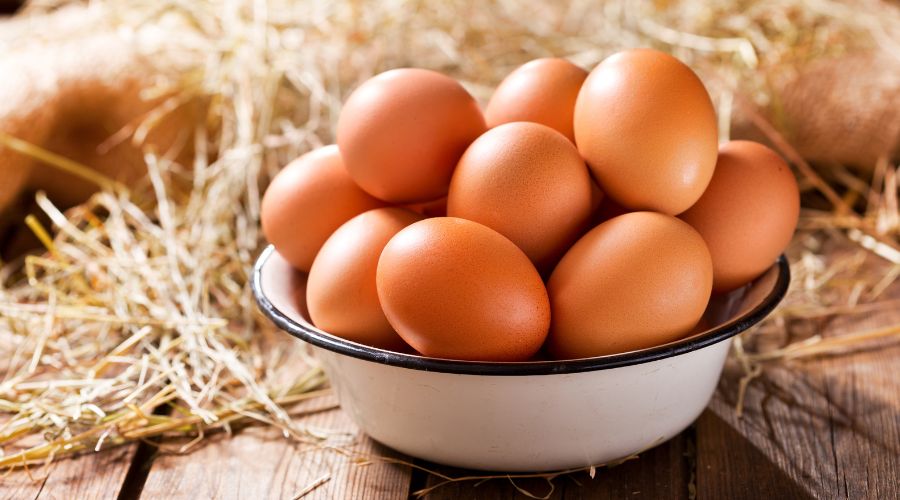
Many Easter customs in Ireland once revolved around eggs, affectionately known as gugs or guggies. Catholics, having abstained from eggs during Lent, often accumulated a great store of eggs by Easter, especially on farms.
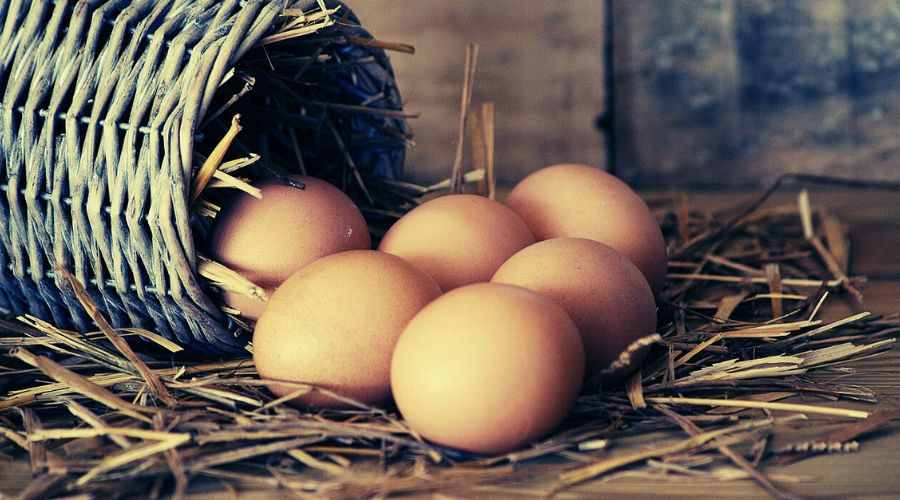
Throughout Holy Week, but particularly on Holy Saturday, children would roam the countryside, visiting farm after farm asking for hen, duck or even goose eggs. This tradition was practised across Ireland, including in Louth, Cavan, Carlow and Limerick.
Guggin’ for eggs
In Co. Wexford, the practice was known as “guggin’ for eggs”. Children would don old clothes, aprons and sometimes masks, carrying baskets and sticks while chanting little rhymes like, “Gugs, gugs, eggs or money, mam?” Most children went guggin’ for eggs by day, but older children often ventured out at night in disguise, much like Halloween guizers. Wexford folklorist Michael Fortune of folklore.ie has helped revive this charming custom in recent years.
|“My Easter eggs on you”
In Ardcarn, Co. Roscommon and Ballymurphy, Co. Carlow, it was customary for visitors to greet households with the phrase, “My Easter eggs on you”, to which the woman of the house would respond by handing over an egg.

In parts of Westmeath, this practice of poorer people collecting eggs from their wealthier neighbours was called the “clúdóg”; in parts of Kilkenny and Laois, it was known as the “cubóg“; in other parts of Kilkenny, the “pruthóg” and in parts of Carlow, it was called the “pleadóg”. While the term clúdóg literally referred to a batch of eggs, it gradually came to mean a gift of eggs, and all these related terms were also used to describe the outdoor egg-eating feast on Easter Sunday (more on this below). One account from Rower, Co. Kilkenny, lamented the decline of the egg-gifting custom in the late 1930s:
“The kind people of olden times often gladdened the hearts of their poorer neighbours by sending them a gift of eggs for Easter. But this custom no longer exists… It was also customary long ago for poor children to go from towns to the country asking what they termed their Easter “cubóg” this meant their Easter egg, as eggs were plentiful at that time of the year.”
Easter egg breakfasts
Easter Sunday usually began with a hearty breakfast of eggs, particularly those laid on Good Friday, which had been marked with a cross and saved for Easter Sunday. Those eggs were never to be sold and were believed never to spoil. Eating a Good Friday egg was believed to protect a person from sickness for the year ahead, a custom recorded in Co. Louth in the late 1930s. Birds hatched from Good Friday eggs were believed to be particularly robust.
>>> YOU MIGHT ALSO LIKE: 1879 Easter eggs controversy in Carrick-on-Suir workhouse
Some households held egg-eating competitions on Easter morning. In Butlerstown, Co. Cork, one local recalled competitions where children ate as many as 18 eggs. In Cappamore, in Limerick, it was said that anyone who ate 12 eggs on Easter Sunday would never marry.
Outdoor feasts
On Easter Sunday or Easter Monday, children would gather for an outdoor picnic or party, lighting fires in fields, under trees or beside hedges. They would then cook the eggs they had collected on Holy Saturday and in the days leading up to Easter, either by boiling them in a pot or billycan or by roasting them on the fire’s dying embers. This was a particularly popular tradition in Co. Cavan, where this outdoor feast was called a “clúdóg” or “clúideog”, while in other areas, it was known as a “pléideog”, “pleadóg”, “praitheog”, “prahóg” or “pruthóg”. In parts of Longford, Donegal and Fermanagh, children built makeshift dens or huts called “Easter houses”, where they cooked and feasted on the eggs.
Again, competitions were held at these outdoor events to see who could eat the most eggs in one sitting, with children often boasting for weeks afterwards about their achievements. But eggs weren’t just for eating – they were also played with. Using natural materials like onion skins, nettles, gorse petals and lichens, children dyed eggs by adding these to the water in which they were cooking. The dyed shells were later used to decorate May bushes. One popular game, especially enjoyed in Ulster and parts of northern Leinster, involved rolling hard-boiled eggs down hills in a race.
Chocolate eggs
By the late 19th century, chocolate Easter eggs had made their way into Irish shops, though many could not afford such a luxury. References to chocolate eggs appear in the late 1930s Schools’ Folklore Collection in areas like Cork, Kildare and Carlow. For example, Violet Seabrooke from Hacketstown, Co. Carlow, stated:
“Some people buy Easter eggs in the shops. They are made of chocolate with silver paper on them.”
The sweet treat was still a novelty in Ireland, and for many, real eggs remained the heart of the Easter celebration for years to come.
Cake dances
Easter was also a time of music and dancing, and in some areas, a competitive “cake dance” took place on Easter Sunday evening, often outdoors or at a crossroads. A large barmbrack (a current loaf), decorated with designs of birds, fish and animals on its crust, was displayed on fine white linen as music played. Couples then competed in lively dances for the prize – the cake itself. The most spirited dancers or the last couple dancing claimed the prize, earning the right to “take the cake” and share it with friends. The cake dance competition was recently revived in Leitrim.
Easter Monday traditions
Easter Monday was widely believed to be an unlucky day for sowing seeds, with many refraining from planting crops on this day.
Fairs were often held on Easter Monday, where the usual mix of trading, games, sports and entertainment took centre stage. Gambling was a common feature, and occasionally, organized faction fighting added a rowdy dimension to the festivities.
Though many old Easter customs have faded in Ireland, others are being actively revived. From guggin’ for eggs to the cake dance, communities across the country are starting to reconnect with these traditions.
Advertising Disclaimer: This article contains affiliate links. Irish Heritage News is an affiliate of FindMyPast. We may earn commissions from qualifying purchases.
READ NOW
➤ 1879 Easter eggs controversy in Carrick-on-Suir workhouse
➤ RIC barracks under siege in Clarinbridge and Oranmore, Co. Galway, during the Easter Rising
➤ Remembering William Deans, the Dublin docker who received two bravery awards
➤ New documentary explores the life of Fenian Joseph Poole
➤ The cuckoo in Irish folklore





One Response
Loved reading about the traditions of the past! Glad I signed up to receive the articles. You provide a great service in honouring our past!