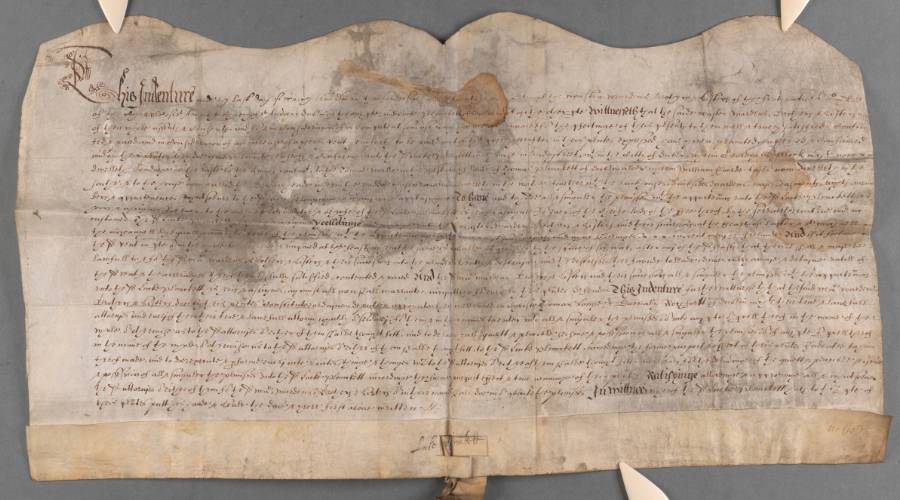
Nearly 200,000 newly released historical records have pushed the Virtual Record Treasury of Ireland beyond the half-million mark, while a new initiative aims to uncover Ireland’s documentary heritage in French archives.
The Virtual Record Treasury of Ireland (VRTI) released a further 194,000 historical records on Tuesday, 30 June, bringing the total number of freely available records on the online resource to 544,000.
Hosted by Trinity College Dublin and funded by the Department of Culture, Communications and Sport, the VRTI is an international research partnership established to digitally reconstruct the Public Record Office of Ireland, much of which was destroyed by fire on 30 June 1922 during the opening stages of the Civil War – an event that obliterated seven centuries of Irish archival records. This year’s release marks the 104th anniversary of the fire.

Among the newly available material are records relating to medieval poachers, the taxation of potatoes in 1692, the mysterious Connaught Worm (“Conogh Worm”) and Irish support for the American rebels in 1776.
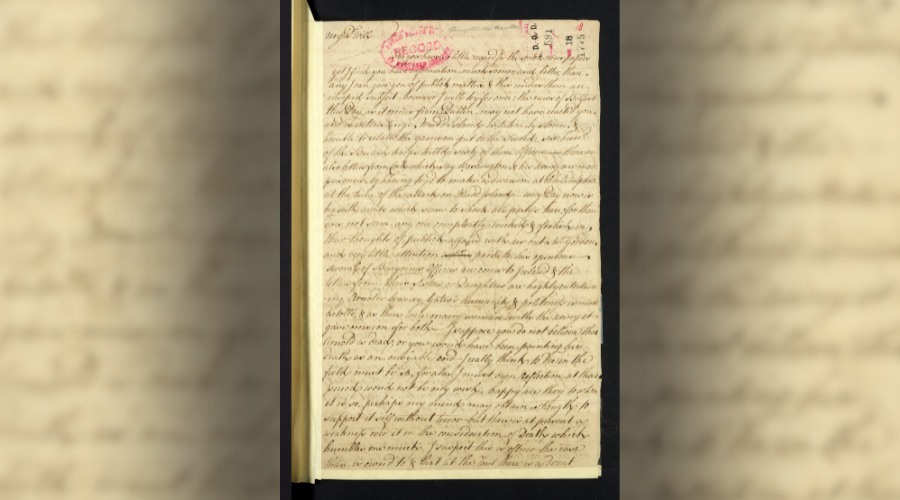
Like the rest of the records in the Virtual Treasury, the newly released material consists of replacement records, including transcripts and copies, identified in more than 100 partner archives, libraries and other repositories in Ireland and overseas.
In addition, four new collections curated by VRTI historians allow the public to explore digitized material and expert commentary linked to critical moments in Irish history. Five new “Gold Seams” – full-scale reconstructions of entire series of archives destroyed in 1922 – provide deep historical context and exploration tools that offer an enriched understanding of life in the past.
The VRTI’s Knowledge Graph for Irish History has also been significantly expanded. Developed by VRTI historians in collaboration with computer scientists at the ADAPT, the Research Ireland Centre for AI-Driven Digital Content Technology, it now links more than 15,000 people from Irish history with approximately 3.5 million connected historical facts, enabling users to move directly between historical people and events and the surviving records that tell their stories. The addition of more than 2,300 early modern women has dramatically expanded the representation of women in Ireland’s digital historical record. A new “Showcase” feature enables users to directly curate a set of knowledge graph people and events on a particular theme.
Virtual Treasury 104 (June 2026) releases at a glance
- 194,000 new records bring to 544,000 the total number of records available in the VRTI and 340 million words of searchable Irish history.
- Enhanced Knowledge Graph of Irish History: A further 5,800 historical individuals added since last June, including women from the early modern period (1550–1700) and individuals from the medieval/Norman period.
- Catholic Emancipation, 1825–29: Curated collection traces the campaign led by Daniel O’Connell, through letters, petitions, intelligence reports and government correspondence.
- States of Independence, 1776–83: Curated collection reveals the close connections between Ireland and the American Revolution.
- The Birth of Local History in Ireland: Curated collection gathers together attempts by early modern local history enthusiasts to document the customs, folklore, history and landscape of their localities.
- State Papers Ireland, 1660–1715: Over 40 more volumes of State Papers and Signet Office records have been released. These have been interconnected with the Knowledge Graph, creating a powerful new tool for researching this tumultuous period of Irish history following Cromwell’s death.
- Deeds of the Guild of St Anne, 1237–1778: Gold Seam containing 800 stories of the lives of ordinary men and women in Dublin, from arranging a funeral procession in 1345 and leaving bequests for prisoners in Dublin Castle in 1380, to mapping a property transaction on Merchants Quay in 1739.
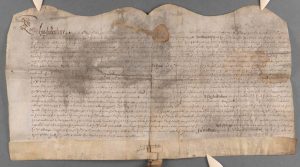
- Parchment Conquest, 1171–1307: In 8,000 printed summaries of records drawn from a Calendar of Documents Relating to Ireland we encounter Italian tax-collectors in Galway, poachers in Dublin and women seizing land in Cork.
- Medieval Irish Exchequer Roll, 1309–10: This is one of only two original medieval memoranda rolls of the Irish exchequer to survive in 1922 and contains 56 parchment membranes.
- Registers of the Archbishops of Armagh, 1361–1542: Four volumes capturing the workings of church government, its extensive landholding, legal disputes and clerical discipline, as well as the relationships between English and Gaelic communities in medieval Ireland.
A F F I L I A T E A D

Find out more about the new releases here.
Dr Ciarán Wallace, Programme Director, VRTI and Department of History, Trinity, said:
“We are delighted to announce that the number of records in the Virtual Record Treasury of Ireland has passed the half-million mark. This important milestone has only been possible through our unique partnership with 100 archives, libraries and memory institutions worldwide. Four new Gold Seams and five new curated collections build on the success of a platform that has already attracted more than 7 million visits.”
Forthcoming project exploring French links
The VRTI also announced the start of a new two-year project, “Journey to Europe: Archives of the Irish in France”, which will identify records of Irish historical significance held in French archives and make them freely available through the VRTI. The project will examine Wolfe Tone’s mission to France, the Irish Brigade and Irish Legion in the French Army, the network of Irish colleges across France and Irish merchants who traded along France’s Atlantic coast, as well as the activities of Irish artists, fugitives, slavers and criminals in France.
What is the Virtual Record Treasury of Ireland?
The Virtual Record Treasury of Ireland is an all-island and international research partnership committed to reconstructing the archive of the Public Record Office of Ireland, which was destroyed during the Civil War in 1922. The launch of the project by Taoiseach Micheál Martin in 2022, as a living legacy of the Decade of Centenaries, marked the 100th anniversary of the loss of Ireland’s public records, some of which dated back to the 13th century.
Since its launch four years ago, the VRTI has become home to 544,000 records and 340 million searchable words of Irish history. This open-access resource is freely and permanently available online. Led by Trinity College Dublin and supported by the Department of Culture, Communications and Sport, this ambitious project brings together computer scientists, archivists, historians and librarians working collaboratively to digitally reconstruct the lost collections of Ireland’s destroyed Public Record Office.
One hundred partner institutions across the island of Ireland and around the world have contributed digital images of replacement documents, including transcripts and duplicates, to the Virtual Treasury. Core collaborators include the National Archives of Ireland (NAI), the Public Record Office of Northern Ireland (PRONI), the National Archives UK (TNA), the Irish Manuscripts Commission (IMC) and the Library of Trinity College Dublin.
Advertising Disclaimer: This article contains affiliate links. Irish Heritage News is an affiliate of FindMyPast. We may earn commissions from qualifying purchases – this does not affect the amount you pay for your purchase.
READ NOW
➤ Free guide explains how to search surviving fragments of Ireland’s lost 19th-century census records
➤ Almost 110,000 burial records from Cork now searchable online for free
➤ Shipwrecks of Dublin Bay exhibition opens at Dublin Port
➤ New guide explains how to use Griffith’s Valuation for Irish family history research
➤ Choosing the right DNA test for Irish family history research